Car owners often face a tough choice when it comes to protecting their vehicle’s paint. Two popular options stand out: Paint Protection Film (PPF) and ceramic coating.
Both offer unique benefits, but they work in different ways.
PPF is a clear wrap made of urethane that covers the car’s surface. It shields against scratches, rock chips, and other physical damage. The film has self-healing properties, which means minor scratches can disappear on their own.
Ceramic coating, on the other hand, is a liquid polymer that bonds with the car’s paint. It creates a thin, hard layer that repels water and protects against UV rays, chemicals, and minor scratches.
While it doesn’t offer the same level of physical protection as PPF, ceramic coating is easier to maintain and can make the car’s paint look glossier for longer.
PPF is a clear wrap made of urethane that covers the car’s surface. It shields against scratches, rock chips, and other physical damage. The film has self-healing properties, which means minor scratches can disappear on their own.
PPF provides the best protection against physical impacts and is ideal for areas prone to road debris.
Ceramic coating, on the other hand, is a liquid polymer that bonds with the car’s paint. It creates a thin, hard layer that repels water and protects against UV rays, chemicals, and minor scratches.
While it doesn’t offer the same level of physical protection as PPF, ceramic coating is easier to maintain and can make the car’s paint look glossier for longer.
Understanding PPF
Paint Protection Film (PPF) is a clear, durable layer that shields a car’s paint from damage. It offers strong protection against scratches, chips, and other wear.
PPF has unique properties that make it effective for preserving a vehicle’s appearance.
Composition and Properties of PPF
PPF is made of thermoplastic urethane, a flexible and tough material. It is clear and self-healing, which means small scratches disappear with heat.
The film is typically 6-8 mils thick, providing a strong barrier against impacts.
PPF resists yellowing and maintains its clarity over time. It can stretch to fit curved surfaces without wrinkling. The material is also resistant to chemicals, UV rays, and extreme temperatures.
Benefits of Paint Protection Film
PPF offers many advantages for car owners. It prevents paint chips from rocks and road debris. The film absorbs impacts that would otherwise damage the paint.
PPF keeps the car looking new for longer. It preserves resale value by protecting the original paint. The film is almost invisible when applied correctly.
PPF reduces the need for touch-ups and repairs. It saves time and money on maintenance in the long run. The film can last 5-10 years with proper care.
Installation Process of PPF
Applying PPF requires skill and precision. Professionals clean and prep the car’s surface thoroughly. They may use a plotter to cut custom pieces for each panel.
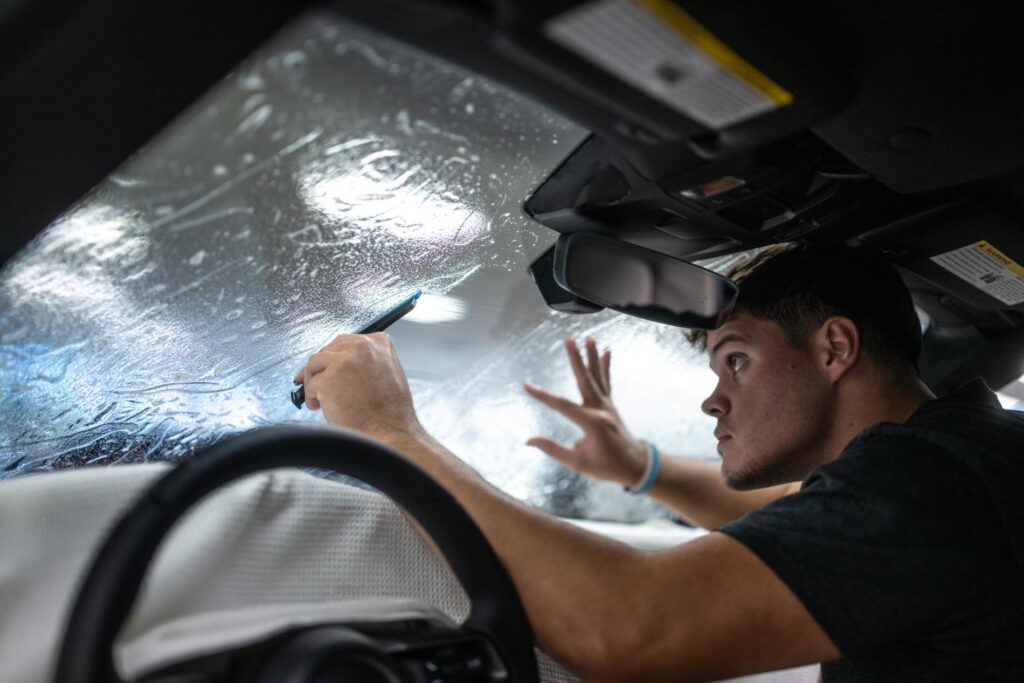
The installer sprays the surface with a slip solution. They carefully position the film and squeegee out air bubbles.
Edges are tucked or trimmed for a seamless look.
Heat guns help the film conform to curves. The process can take several hours to a full day. Proper installation ensures the PPF bonds well and looks invisible.
Exploring Ceramic Coating
Ceramic coating is a liquid polymer that bonds with a car’s paint to create a protective layer. It offers shine and protection against minor scratches, UV rays, and chemicals.
Chemical Composition of Ceramic Coatings
Ceramic coatings use silica-based polymers. These form a strong bond with the car’s clear coat. The main ingredient is silicon dioxide (SiO2). Some coatings also add titanium dioxide (TiO2).
The polymers create a hard, glass-like surface. This surface repels water, dirt, and other contaminants. The coating’s thickness ranges from 1 to 3 microns.
Higher-quality coatings have more SiO2. This makes them more durable and longer-lasting.
Advantages of Ceramic Coating
Ceramic coatings make cars easier to clean. They create a slick surface that dirt and grime can’t stick to easily.
These coatings also protect against UV rays. This helps prevent paint fading and oxidation.
Ceramic coatings add gloss and depth to a car’s paint. They can make colors look richer and more vibrant.
They resist minor scratches and swirl marks. This keeps the paint looking newer for longer.
Most ceramic coatings last 2-5 years with proper care. Some high-end options can last even longer.
Application of Ceramic Coating
Proper prep is key for ceramic coating. The car must be clean, clay barred, and polished.
A pro applies the coating by hand. They use special applicator pads and microfiber towels.
The coating needs time to cure. This can take 24-48 hours. The car must stay dry during this time.
Some coatings need multiple layers. Each layer adds protection and shine.
After curing, the coating needs gentle care. Use pH-neutral car shampoos. Avoid automatic car washes for best results.
Comparative Analysis
PPF and ceramic coatings protect cars in different ways. They vary in how long they last, how to care for them, their costs, and how they change a car’s look. Let’s compare these key factors.
Durability and Longevity
PPF lasts longer than ceramic coatings. It can protect a car for 5-10 years. Ceramic coatings usually last 2-5 years.
PPF is thicker. It guards against rocks, bugs, and small scratches. Some PPF can even heal small marks on its own.
Ceramic coatings are very thin. They don’t stop physical damage as well. But they do resist chemicals and UV rays better than PPF.
Both PPF and ceramic coatings can fade over time. Harsh weather and lots of sun can make them break down faster.
Maintenance and Care
Ceramic coatings are easier to clean. Dirt and water don’t stick to them as much. A simple wash is often enough to keep the car looking good.
PPF needs more care. It can trap dirt at its edges. This means more careful cleaning is needed.
Both types of protection make washing easier than bare paint. They help the car stay cleaner for longer.
Regular checks are important for both. Look for any damage or wear. Fixing small issues can help the protection last longer.
Cost Considerations
PPF costs more up front. It takes longer to apply and uses more expensive materials.
Ceramic coatings are cheaper at first. But they may need to be redone more often.
PPF might save money over time. It lasts longer and protects against more types of damage.
The size of the car affects the price for both. Larger cars cost more to protect.
Some shops offer packages with both PPF and ceramic coating. This can give the best of both, but at a higher price.
Aesthetic Impact
PPF is almost invisible when done well. It keeps the car’s original look. Some types add extra shine.
Ceramic coatings change how the paint looks. They make colors deeper and add a glossy effect.
PPF can yellow over time, especially in sunny areas. This can affect light-colored cars more.
Ceramic coatings don’t yellow. But they can make small paint flaws more visible.
Both can be applied to the whole car or just parts. This lets owners choose where they want extra protection or shine.
Making the Right Choice
Selecting between PPF and ceramic coating requires careful consideration of your vehicle’s needs and usage.
The decision hinges on factors like your driving habits, local environment, and desired level of protection.
Personal Needs Assessment
Think about how you use your car. Do you drive on rough roads often? A PPF might be best for you. It guards against rock chips and scratches.
Do you want your car to look shiny and new? Ceramic coating could be the way to go. It makes cleaning easier and adds gloss.
For those who park in tight spots or busy areas, PPF offers better scratch protection. If you wash your car a lot, ceramic coating helps repel dirt and water. Some car owners even use both – PPF on high-impact areas and ceramic coating over the whole car.
Environmental Factors
Your local climate plays a big role in this choice. In areas with lots of sun, ceramic coating helps protect against UV damage and fading. It’s also great for rainy places since it repels water well.
For snowy regions where road salt is used, PPF provides a strong barrier. It shields your paint from corrosive elements. In dusty or sandy areas, ceramic coating makes it harder for dirt to stick to your car.
Hot climates can benefit from either option. PPF has self-healing properties in heat, while ceramic coating reflects some of the sun’s rays.
Professional Consultation
Talk to a pro before making your choice. They can check your car’s current condition and suggest the best option.
They’ll look at your paint quality, any existing damage, and your budget. A good expert will ask about your car care habits.
Do you like to wax often? Ceramic might be better. Are you okay with some upkeep? PPF could work well. They can also tell you about the latest products.
Some new coatings offer features of both PPF and ceramic. Getting a pro’s view helps ensure you make the right choice for your car’s long-term care.